
Rhenen and Wageningen: the beginning and end of the Second World War in the Netherlands
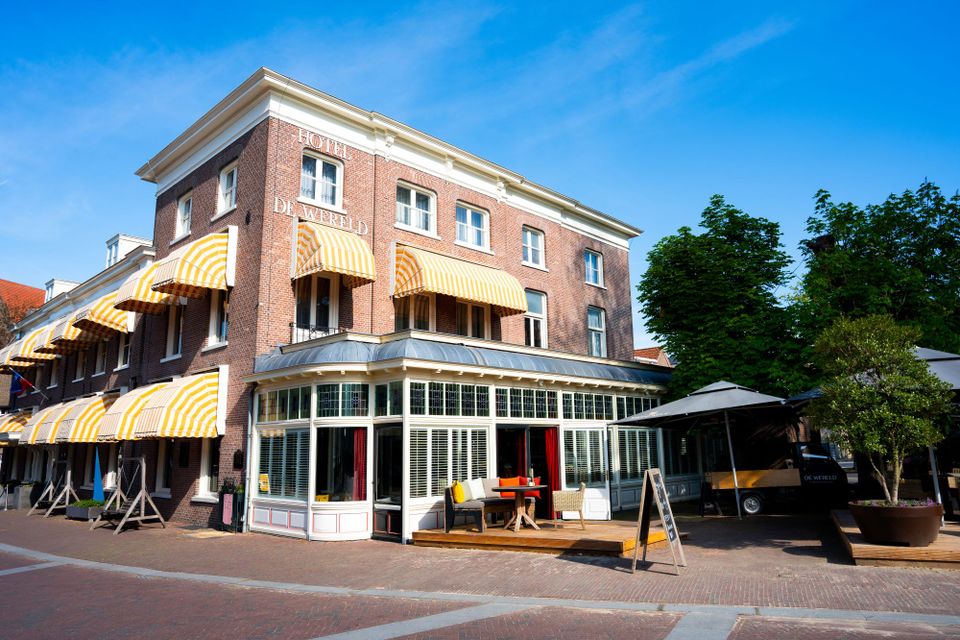
The Battle of the Grebbeberg near Rhenen in May 1940 and the talks held at ‘ Hotel De Wereld ’ in Wageningen on 5 May 1945 mark the beginning and end of the Second World War in the Netherlands. These places and dates hold a special place in our collective memory. But what actually happened back then, and what traces of it are still visible today? Hop on your bike and discover it for yourself.
During the Second World War, the neighbouring towns of Rhenen and Wageningen found themselves directly in the line of fire on two occasions. Due to their strategic location on the Lower Rhine and the Grebbeberg, both towns served as the central theatre of war at both the start and the end of the war, forcing the residents to evacuate completely on two occasions.
For instance, on 10 May 1940, the residents had to flee in a hurry to escape the advancing German troops. At the time, via the port of Wageningen …
The Battle of the Grebbeberg near Rhenen in May 1940 and the talks held at ‘ Hotel De Wereld ’ in Wageningen on 5 May 1945 mark the beginning and end of the Second World War in the Netherlands. These places and dates hold a special place in our collective memory. But what actually happened back then, and what traces of it are still visible today? Hop on your bike and discover it for yourself.
During the Second World War, the neighbouring towns of Rhenen and Wageningen found themselves directly in the line of fire on two occasions. Due to their strategic location on the Lower Rhine and the Grebbeberg, both towns served as the central theatre of war at both the start and the end of the war, forcing the residents to evacuate completely on two occasions.
On 10 May 1940, for example, the residents had to flee in a hurry to escape the advancing German troops. At the time, 12,400 residents of Wageningen and 6,400 from Rhenen were evacuated via the port of Wageningen to the west of the country, using coal barges, amongst other means. Around 2,000 residents remained in Wageningen, whilst 500 stayed behind in Rhenen.
Following the battle for the Grebbeberg and the bombing of Rotterdam, the Netherlands was forced to surrender. Years of occupation and hardship followed, until D-Day and the Allied advance in 1944. Following the failure of Operation Market Garden in September of that year, the Allied advance ground to a halt. The Lower Rhine became the new, permanent front line that separated the allied and enemy armies for months on end.
Rhenen and Wageningen once again came under direct heavy fire from the Betuwe. In October 1944, both towns had to be completely evacuated for the second time. This time, residents were not allowed to return to their homes after a week, but only after eight months (in May 1945).
When liberation finally came in April and May 1945, the residents found ghost towns. The historic centres were badly damaged, houses had been looted and key infrastructure — such as the Rhine bridge at Rhenen — had been completely destroyed.
Want to find out more? The De Greb Foundation focuseson the history of the Battle of the Grebbeberg, whilst the Wageningen Culture Foundation manages the ‘Wageningen 1940–1945’ website. The De Greb Foundation also has an extensive online library of stories and articles, carries out research, organises guided tours and hosts lectures on the Battle of the Grebbeberg. See also the video ‘The Battle of the Grebbeberg: an introduction in 4 minutes’.
With this cycle route, you can set off on your own to discover what took place in Rhenen, on and around the Grebbeberg and in Wageningen at the start and end of the war.